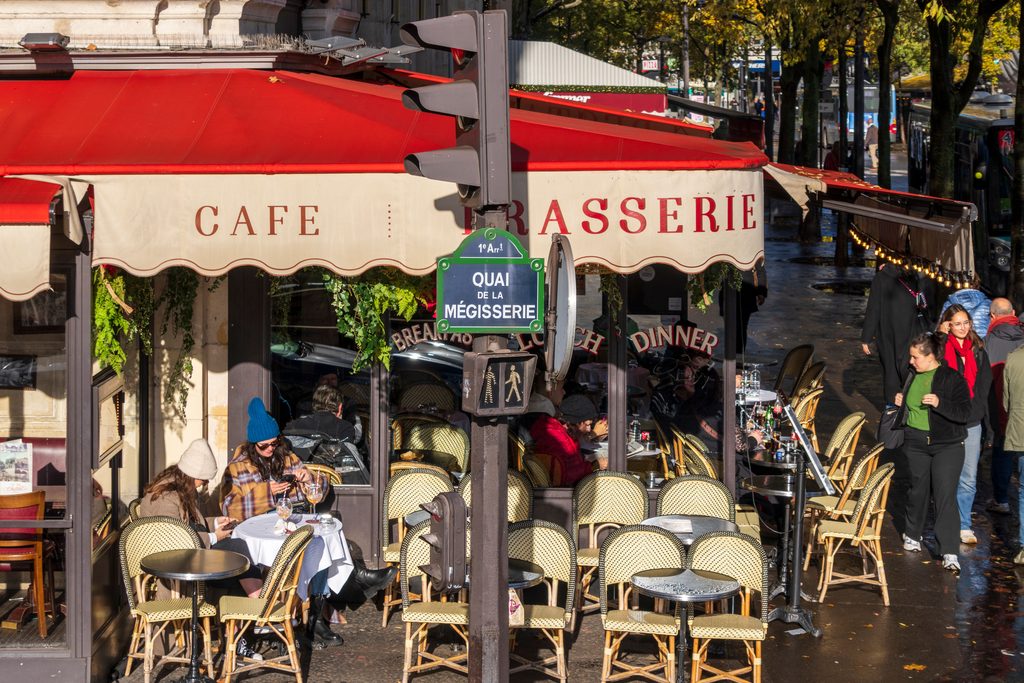
When you hear the words French immersion, what comes to your mind? Probably moving to Paris or sitting in French cafés and being surrounded by the language every day. It sounds like a wonderful way to improve your French. And it certainly can be. But we often forget that:
Living in France and being immersed in French aren’t necessarily the same thing.
You can live in France and spend most of your day speaking English. You can work in English, watch English-language television, spend time with English-speaking friends and use English with your partner. You might order a coffee in French in the morning, then spend the rest of the day communicating almost entirely in English.
And the opposite is also true.
You can live thousands of kilometres away from France and make French a meaningful part of your everyday life. So if you’ve been wondering how to immerse yourself in French without moving abroad, I’d encourage you to start with a different question. Not “Where do I need to live to improve my French?” But: “Where could French exist in the life I already have?”
That shift can make French immersion feel much more realistic, enjoyable and sustainable.
What is French immersion, really?
French immersion is often described as surrounding yourself with the French language. But that doesn’t necessarily mean physically surrounding yourself with French speakers. It can also mean creating regular opportunities to encounter, understand and use French in your everyday life. You could listen to French podcasts while walking. Read a French novel before bed. Follow French-speaking creators who share your interests. Watch French films. Or have regular conversations with someone who speaks French.
The important thing is that French becomes something you engage with outside a formal lesson. And ideally, something you actually enjoy. Because if you treat every encounter with French as another obligation, it’s going to be difficult to maintain over time. I don’t think French immersion needs to mean turning your entire life into a language classroom. I think it should help French become part of your life.
Why living in France doesn’t automatically make you fluent in French
Moving to France can give you wonderful opportunities to practise. You’re surrounded by French signs, conversations, shops, television, radio and everyday interactions. But being surrounded by a language doesn’t automatically mean you’re using it.
I live in Hong-Kong and I’m surrounded by Cantonese. That doesn’t mean I’ve learned Cantonese. I actually spend most of my time speaking English. I have English speaking friends, everyone speaks to me in English at the supermarket, in coffee shops and even at the library. I’m physically in Hong-Kong but if I don’t decide to incorporate Cantonese in my everyday life, no one will do it for me and I’ll just go on speaking English.
Now, take someone living in the United States, Australia or Germany. They listen to French podcasts during their morning walk. They read French books. They have a weekly conversation with a French tutor. They follow French-speaking creators and regularly watch French films. They might have more meaningful contact with the language than someone who lives in France but rarely uses it.
Of course, living in France can provide opportunities that are difficult to recreate elsewhere, particularly spontaneous conversations and everyday social interactions. But location alone doesn’t determine how much progress you’ll make.
What matters is how you engage with the language around you.
How to create French immersion at home: 6 practical ideas
You don’t need to change your entire routine to bring more French into your life. In fact, I’d suggest starting with activities you already enjoy. Here are six ways to create your own French immersion routine. Start with one and see if you can incorporate it in your routine for the next 2 weeks.
1. Listen to French during activities you already do
Do you go for a walk every morning? Cook dinner most evenings? Spend time gardening or doing things around the house? These can be opportunities to listen to French. You could put on a French podcast while walking or listen to a short French recording while preparing dinner.
But choose something that’s reasonably appropriate for your level. If you’re still developing your French listening comprehension, an advanced podcast full of unfamiliar vocabulary might not be the most useful place to start. And remember that listening with French in the background isn’t always the same as actively practising comprehension. Sometimes you’re simply enjoying the sound of the language. Other times, you might want to sit down and focus on understanding a short recording. Both can have a place in your routine.
Related reading: Does Watching Netflix in French Help You Learn French?
2. Discover French YouTube Channels That Match Your Interests

One of the easiest ways to make French immersion enjoyable is to connect it to something you’re already interested in. If you love cooking, you could follow Hervé Cuisine, who shares recipes and cooking tips in French. If you’re more into gardening, have a look at Le Potager d’Olivier, where you’ll find practical advice about growing vegetables and looking after your garden.
Perhaps you’re passionate about history. Nota Bene explores historical events, fascinating figures and different civilizations. If you love fashion, you might enjoy the French-language lifestyle and fashion videos from Léna Situations. And if travelling is your passion, Bruno Maltor shares his adventures and discoveries around the world.
The idea isn’t to follow all these creators or add another five activities to your learning routine. It’s to find something you already enjoy doing in English and discover how you could enjoy it in French instead.
Because if you don’t enjoy reading the news in English, forcing yourself to read French news every morning probably isn’t going to make language learning particularly appealing. But if you love cooking, watching someone prepare a recipe in French might be something you genuinely look forward to. You can also benefit from encountering vocabulary repeatedly within a familiar subject.
The context helps you understand what you’re hearing. And because the vocabulary relates to something you enjoy, you have a reason to remember it.
3. Make French part of your reading routine
If you enjoy reading, why not include some French? You don’t have to start with a difficult literary novel. You could read a short story, a magazine article, a recipe or a few pages of a book that interests you. If you’re an intermediate French learner, you might enjoy a book you’ve already read in English. Knowing the story can make it easier to follow the French version.
You could also try reading for ten minutes before bed. But don’t feel that you need to look up every unfamiliar word. Sometimes it’s useful to investigate vocabulary carefully. Other times, it’s better to keep reading and follow the general meaning. For intermediate learners, I advise you to read books by David Foenkinos. His books aren’t too long and I really like his writing.
The goal is to develop a relationship with reading in French, not to turn every page into a vocabulary test.
4. Watch French films and series you genuinely enjoy
Watching French films can be a lovely way to spend time with the language. You hear different voices, accents, expressions and ways of communicating. You also encounter French culture through stories, humour and everyday situations.
But here’s something I’d encourage you to remember:
Your ultimate goal and your current practice don’t have to be the same thing.
Perhaps your dream is to watch an entire French film without subtitles. That’s a wonderful goal. But if you’re currently struggling to understand natural spoken French, you don’t need to force yourself through two hours of dialogue you barely understand. You could start with a short scene. Watch it once. See what you understand. Use French subtitles to investigate unfamiliar expressions. Then watch it again without subtitles.
This can help you develop your listening skills while still enjoying French films as entertainment.
5. Have regular French conversations
This is particularly important if your goal is to speak French more naturally and confidently. You can listen to French podcasts every day, read French books and watch French films. But if you rarely practise speaking, you might still struggle to retrieve words and construct sentences during a conversation.
Speaking is a skill that needs practice too. And you don’t need to live in France to find opportunities. You could arrange regular conversations with a French-speaking friend, work with a tutor or participate in a conversation group. If you’re nervous about speaking, start with familiar subjects. Talk about your weekend. Describe a film you’ve watched. Explain what you’re planning to do tomorrow. And if possible, find someone who gives you useful feedback. Because practising speaking is valuable, but understanding what you need to improve can make that practice more effective.
6. Change small parts of your digital environment into French
Your phone, computer and social media accounts are probably things you interact with every day. Could some of that time involve French? You might change the language of an app you’re already familiar with. Follow more French-speaking accounts. Search for recipes in French. Or occasionally look something up using French instead of English.
You don’t necessarily need to change your entire phone into French overnight. In fact, that might become more frustrating than useful. Start with something manageable. The idea is to create small opportunities to encounter French naturally.
How much French immersion do you need every day?
There’s no universal number of minutes that guarantees progress. It depends on your current level, your goals, the activities you’re doing and how consistently you engage with them. But I’d encourage you to think about what you can realistically maintain. If you have twenty minutes available most days, that’s a useful starting point.
You don’t need to fill every free moment with French. And you don’t need to feel guilty when you choose to watch something in English. What matters is creating opportunities to return to French regularly. For example, you might spend ten minutes listening to something you enjoy and another ten minutes revisiting useful expressions or practising speaking. On another day, you might have a longer conversation. Or read a few pages of a French book.
Your routine can change depending on your schedule and interests. Consistency doesn’t mean doing exactly the same activity every day. It means finding ways to keep French present in your life over time.
You can start immersing yourself in French today
You don’t need to move to Paris. You don’t need to surround yourself with French speakers every minute of the day. And you certainly don’t need to turn every hobby into a language lesson.
Start by choosing one activity you already enjoy. Find a way to do part of it in French. Then see how it feels. Perhaps you’ll discover a French podcast you love. A French author whose books you want to read. A French-speaking creator whose videos you look forward to. Or a conversation partner who makes speaking French feel more natural. And as you become more comfortable, you can gradually create more space for French in your everyday life.
Because ultimately, French immersion isn’t just about where you live. It’s about the place French has in your life.
Watch the video: How to Immerse Yourself in French Without Living in France
In this video, I explain why living in France doesn’t automatically mean you’re immersed in French, and how you can make the language part of your everyday life wherever you live.
Want to improve your French listening?
If you already know some French but struggle to understand it when people speak naturally, I’ve created a free French Listening Practice Guide for B1 learners.
It includes audio recordings and exercises to help you practise understanding spoken French more actively.
Get your free French Listening Practice Guide
I’m Iris, a French teacher and a language learner myself. At French with Iris, I explore the gap between knowing French and actually understanding and using it in real life.
I’d love to hear from you: If you could bring more French into one part of your everyday life, what would you choose? Not what you think you should do in French, but what you’d genuinely enjoy doing.


Leave a Reply